
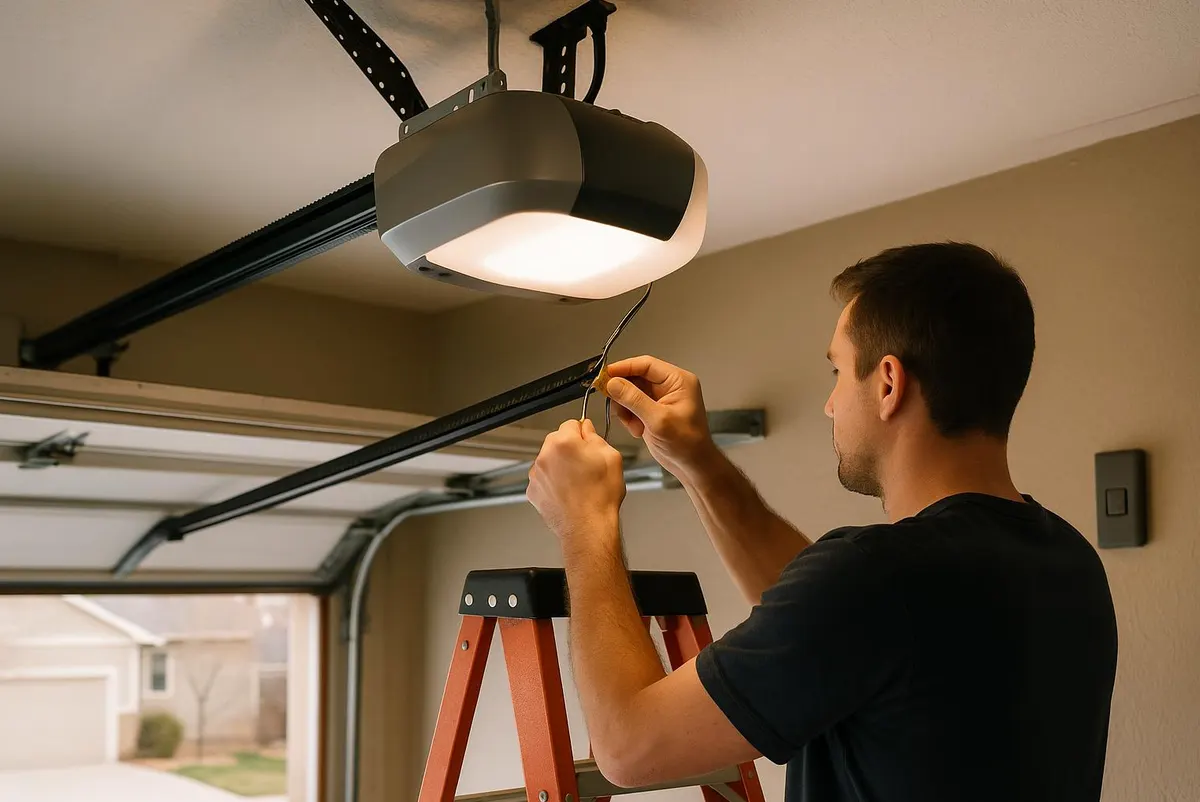
The short answer: before the first real rain hits the Foothills, clear out the summer dust, reseal the bottom of the door, check the spring tension, and make sure your opener has backup power. Do those four things in October or early November and you'll avoid most of the winter garage door calls we get every year.
Start by clearing out the summer buildup
By this point in the year, most garage doors around Tujunga, Sunland, and La Crescenta are carrying a layer of fine dust, and in years with nearby wildfire activity, a film of smoke residue too. That grit works its way into the tracks, rollers, and hinges, turning normal friction into grinding wear right as colder, wetter weather puts extra demand on the system.
- Wipe down the tracks with a damp cloth — don't just blow dust around with compressed air, which pushes it deeper into the roller bearings.
- Check the bottom seal (the rubber strip along the floor) for cracked or flattened sections where dust has ground it down over a dry summer.
- Open and close the door a few times by hand (with it disconnected from the opener) to feel for any new grinding or sticking.
Reseal before the rain, not after
Winter in this part of California means real rain events, sometimes heavy ones, after months of dry conditions. A garage door that sealed fine in July can let water pool under the bottom seal once that rubber has hardened and cracked from UV exposure and heat. Water intrusion is a bigger deal than people expect — it swells wood-composite door panels, rusts steel hardware, and on older homes it can seep toward areas near foundation and electrical where you really don't want standing water.
- Replace the bottom weatherstripping if it's cracked, flattened, or no longer makes full contact with the floor. This is a low-cost part that does a lot of work.
- Check the weatherstripping along the sides and top of the door frame (the stop molding) for gaps where daylight shows through.
- If your garage floor slopes toward the door, confirm the threshold or seal is tall enough to handle actual runoff, not just light drizzle.
Cold mornings change how springs and metal behave
Torsion springs lose a bit of tension as temperatures drop, and in the Foothills the swing between a cold morning and a warm afternoon can be significant in winter. A door that was perfectly balanced in September can start to feel heavier, open unevenly, or make a new clunk as the metal contracts slightly and hardware that was already a little loose starts to shift.
- Test the balance: with the opener disconnected, lift the door halfway by hand. It should stay in place on its own. If it drops or shoots up, the spring tension is off and needs adjustment — this is not a DIY repair given how much force is stored in a wound torsion spring.
- Listen for new squeaks or pops during the first cold snap. That's often the first sign a spring is nearing the end of its life rather than just needing lubrication.
- Lubricate rollers, hinges, and the spring itself with a garage-door-specific silicone or lithium grease — not WD-40, which washes out quickly and attracts dust.
Don't let a power outage leave you locked out
Winter storms in this area can knock out power for stretches, and a garage door opener with no battery backup means you're stuck opening the door manually (or not at all, if you don't know how to release the trolley). Many openers installed in the last several years include a battery backup, but a lot of older units in Foothills homes don't.
- Check whether your opener has a battery backup unit, and if it does, test it by unplugging the opener and confirming the door still operates.
- Locate and test the manual release cord (the red handle hanging from the trolley) so you're not figuring it out for the first time during a storm at night.
- If your opener is older than ten years and has no battery backup option, this is a reasonable time to consider an upgrade — reliability during storms isn't the kind of thing worth gambling on.
A note on older hardware and seismic hardware
Homes in this area that have had earthquake retrofit work done sometimes have reinforced garage door framing or bracing that can shift slightly over time, especially as wet soil expands and contracts through the winter. It's worth a visual check that mounting brackets, hinges, and track fasteners are still snug — loose hardware combined with a heavier, rain-dampened door is a common source of sagging or misalignment that shows up every winter.
When to call Tujunga Garage Door
If your door feels unbalanced, the spring looks stretched or has a visible gap when it's supposed to be coiled tight, or water is getting past the seals no matter what you adjust, that's when it's time to call in a technician rather than keep troubleshooting. Our Garage Door Maintenance visits cover exactly this kind of pre-winter tune-up — full lubrication, hardware check, balance test, and weatherstripping assessment — and if we find a spring that's on its way out, our Spring Replacement service gets it handled safely before it fails on a cold morning when you're already late. We also run Emergency Garage Door Service for the stuck-door, storm-related calls that always seem to come in during the first big rain of the season.
If you're anywhere in Tujunga, Sunland, La Crescenta, Montrose, La Cañada Flintridge, Shadow Hills, Glendale, or Burbank and want your garage door checked before the rains really settle in, give Tujunga Garage Door a call. We'll get it sorted before winter makes the decision for you.